
Lesvos Cheese
|
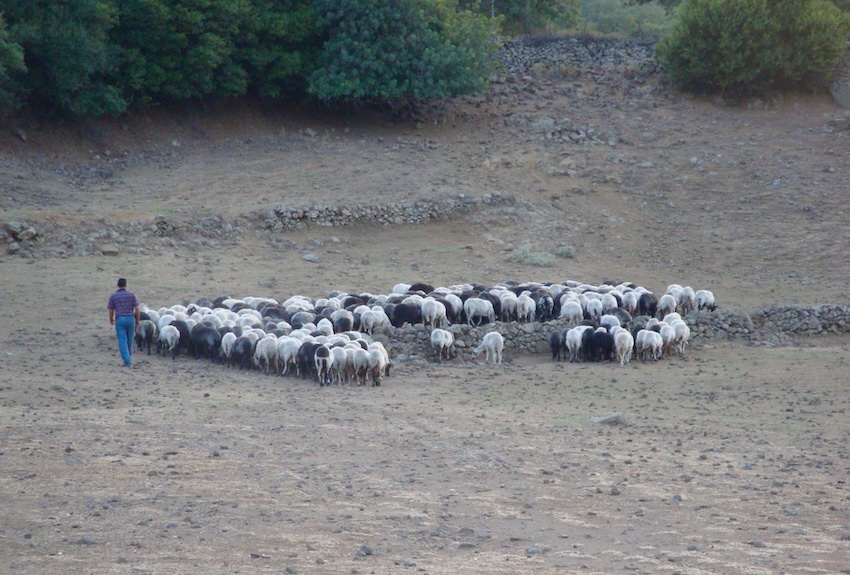
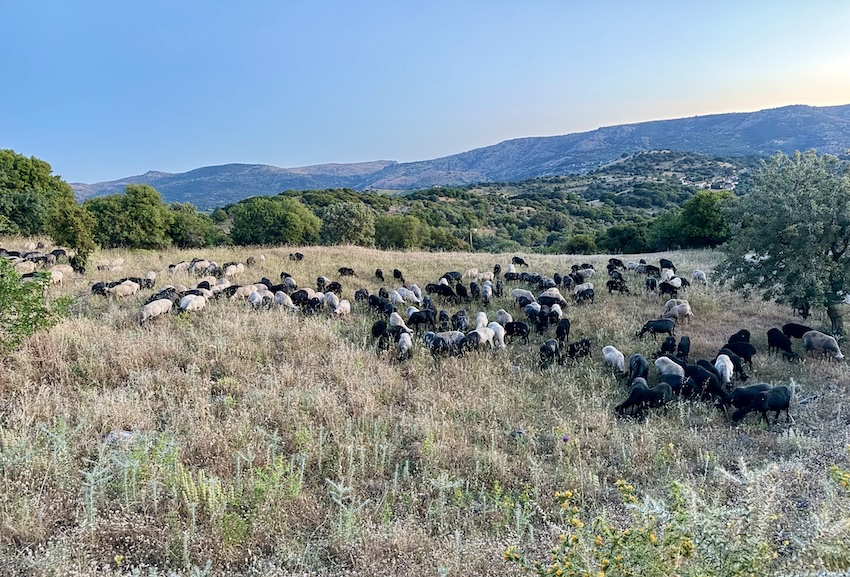
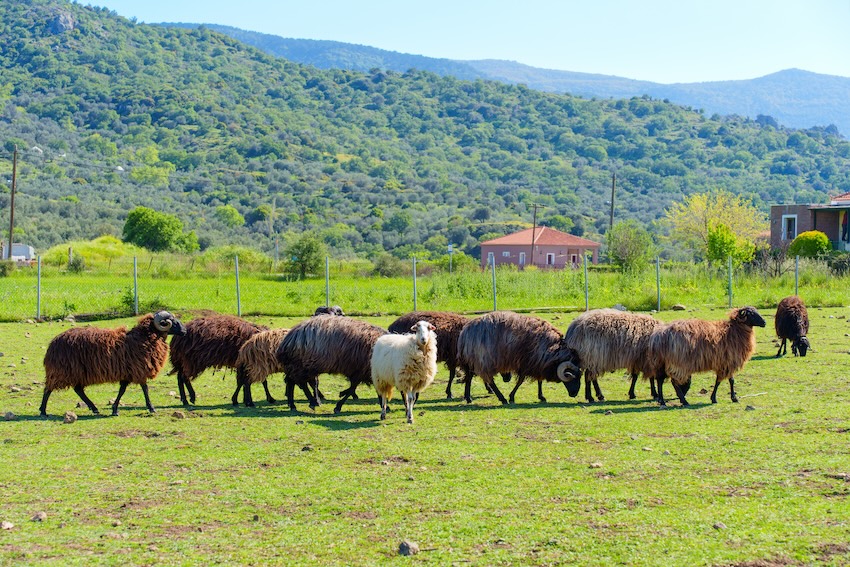
By Amarandi Barrett Lesvos is many things. It is an agricultural island, a sardine island, a sheep island, a pottery island, a bird island and an olive island. It is also a cheese island. There are eight large cheese factories in Western Lesvos and at a minimum there are two in Eastern Lesvos although I am unconvinced there are not more hiding somewhere that I could not find. Besides these large facilities, many women in the villages still make cheese in their homes from the sheep their husbands shepherd in the mountains near their villages. The use of sheep and goats milk in the production of Lesbian cheese is part of what makes Lesbian cheese so special and delicious. |
|
|
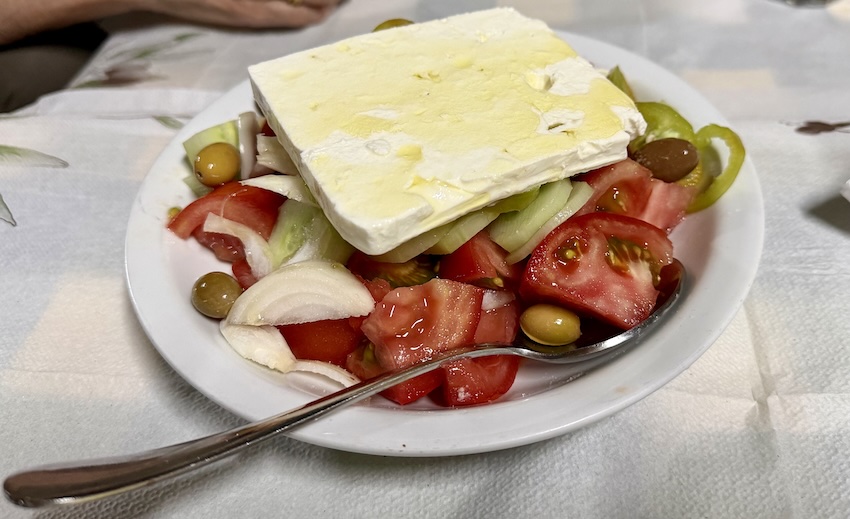
| On an island where many people own sheep it is not surprising that in most of the restaurants and kafeneions of the traditional villages of Western Lesvos the feta cheese you will find on your horiatikisalata will probably have been made by the owners of the establishment if not someone they are related to. The tastes and textures will vary but if you are used to storebought supermarket feta made by the large companies in mainland Greece you will probably like these even more. And the restaurants in the more touristy areas where the owners are so busy they don't have time to tend sheep or make their own cheese the feta will most likely come from one of the cheese factories of the island if not a friend or relative. |
|
|
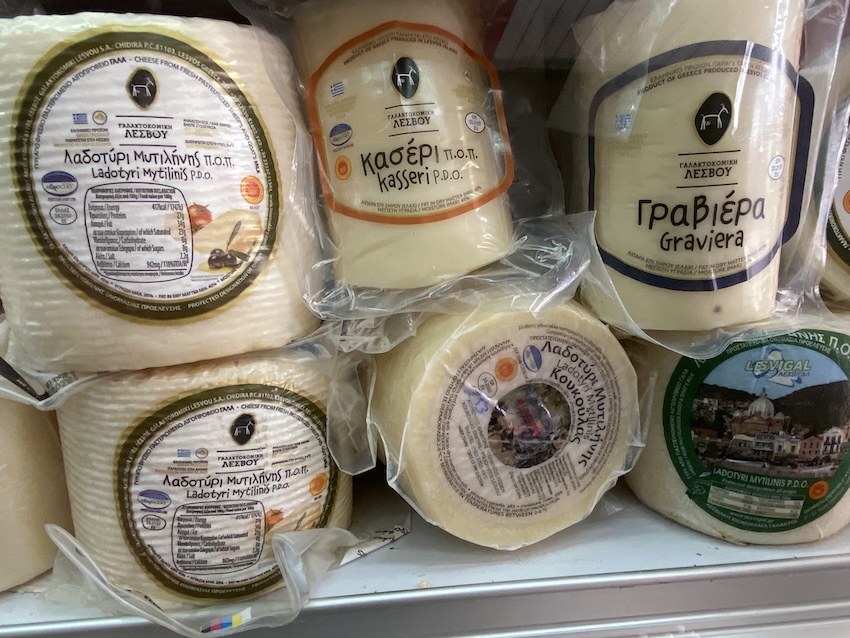
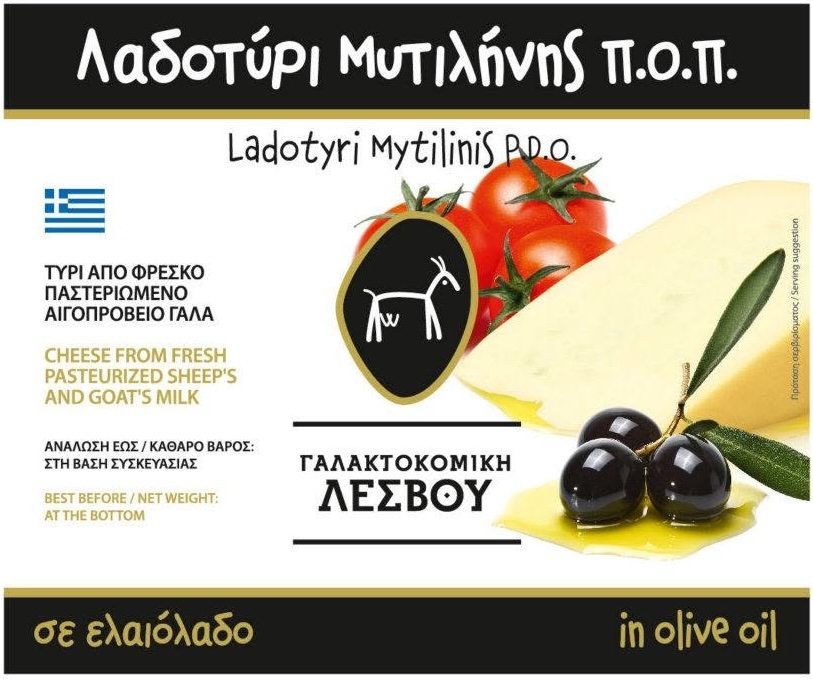
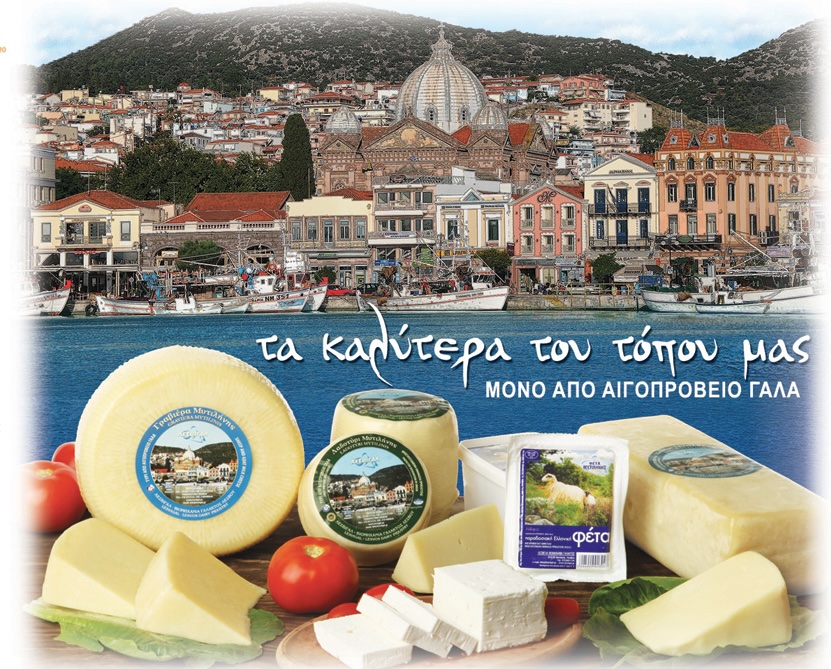
Types of Lesvos CheeseWhile feta is the most well known of the cheeses on Lesvos there are a number of other cheeses that are eaten regularly and are homemade or else come from the local cheese factory and sold in the local markets and have a taste that is quite special. The most special of these special cheeses is called Ladotyri, or oil-cheese, which has had a Protected Designation of Origin (PDO) status since 1996. The PDO means that, like Champagne and the Champagne region of France, this cheese is only produced in Lesvos (although technically you could make it wherever you want but you would not be able to market and sell it as Ladotyri). Ladotyri is a sheep and goats milk cheese although it must be over 70% from sheeps milk. It is yellow, hard, salty, smooth and peppery. This cheese is cut into pieces and preserved in big jars of olive oil. Before the 1960s it was oil-preserved because there was no way to refrigerate cheese. Now it is oil-preserved because it is delicious. |
|
|
|
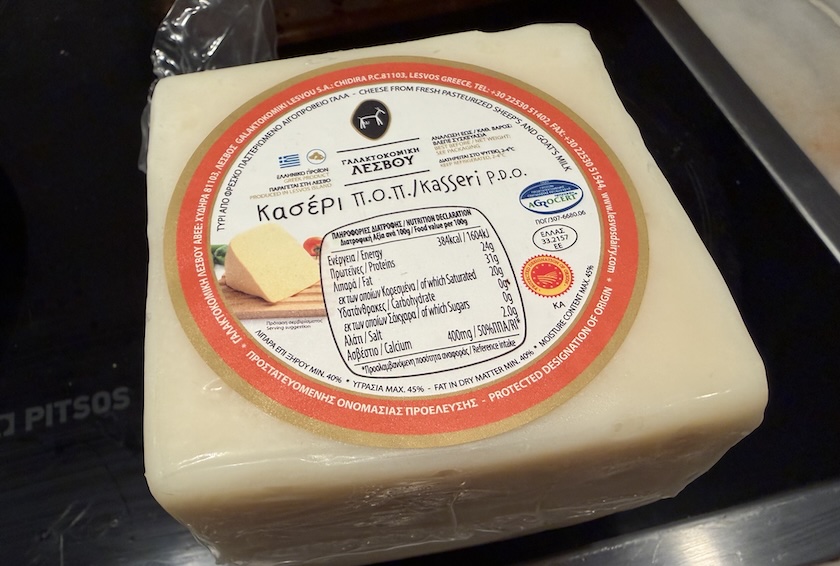
Lesvos also makes a lot of Kaseri, another cheese with a PDO although the geographic origins are looser and kaseri can be made in Lesvos, Macedonia, Thrace or Thessaly. It is another yellow cheese although it is softer and less salty than Ladotyri. Kaseri must be made with sheeps milk but up to 20% of the milk can goats milk. It is the main cheese used in casseropita (a cheese pie), where being cooked in phylo makes it crumbly, buttery, salty and soft. |
|
|
|
Graviera is another hard yellow cheese. It is eaten throughout Greece and its consumption in the country is second only to feta. I really enjoy the Cretan version of this cheese which is available in nearly every grocery store in the country along with a version from Naxos. People make this cheese with whatever milk they have available. In Crete they generally use sheeps milk but in Naxos they use some cow milk. In Lesvos sheeps milk is used because there is so much of it. Graviera tastes a lot like gruyere, a Swiss cheese, and the name gruyere comes from the word graviera. It is nutty and buttery and slightly sweet and not too salty. While most people say the best Graviera comes from Crete or Naxos my father thinks that the Lesvos Graviera is as good or better. (He also says the same about Kaseri and feta). |
|
|
|
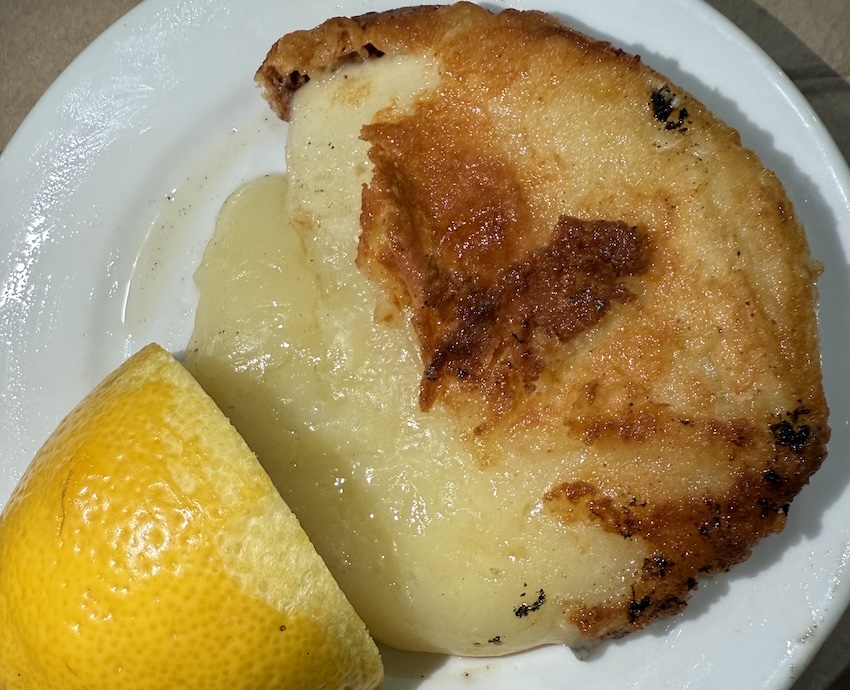
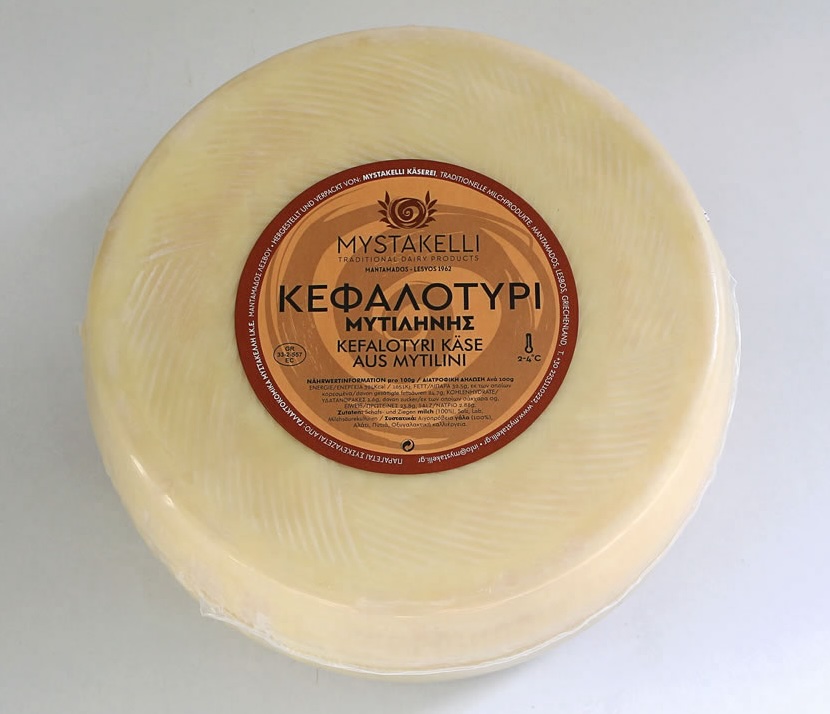
Kefalotyri is also widely made on Lesvos. The name translates to headcheese but this is not piggy bits floating in aspic. It is a very hard sharp white cheese that looks very much like parmesan and has similarities in taste as well. It is often used for saganaki, a fried cheese dish which in Greek restaurants in the United States is brought to your table in flames while the waiter yells “Opa” and tries not to singe off his eyebrows. Kefalotyri is a nice cheese to eat with ouzo because of how salty it is. This is a sheep or goats milk cheese. |
|
|
|
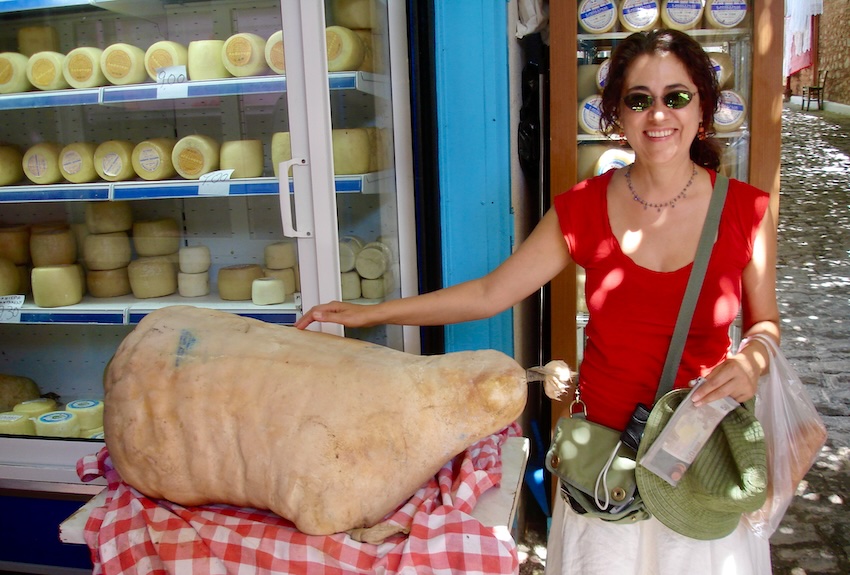
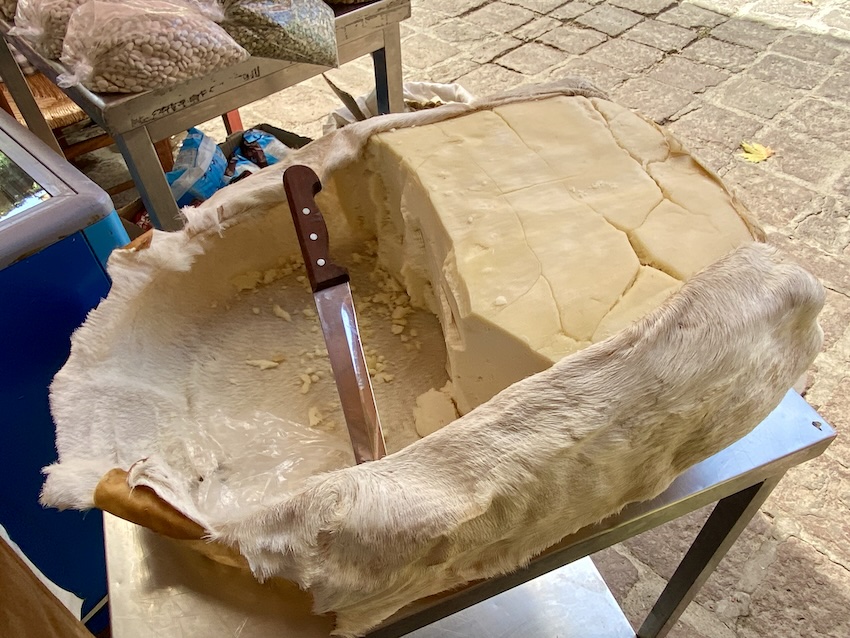
Another special sheep cheese from Lesvos is Touloumisio, which I have only ever seen in the town of Agiassos. This cheese is matured in a bag made of animal skin which is turned inside out so that the animal fur touches the cheese and imparts a very barnyardy flavor. It is a very intense cheese, crumbly, creamy, salty, and peppery to the point of spicyness. See the photo of my mom at the top of the article too. |
|
|
|
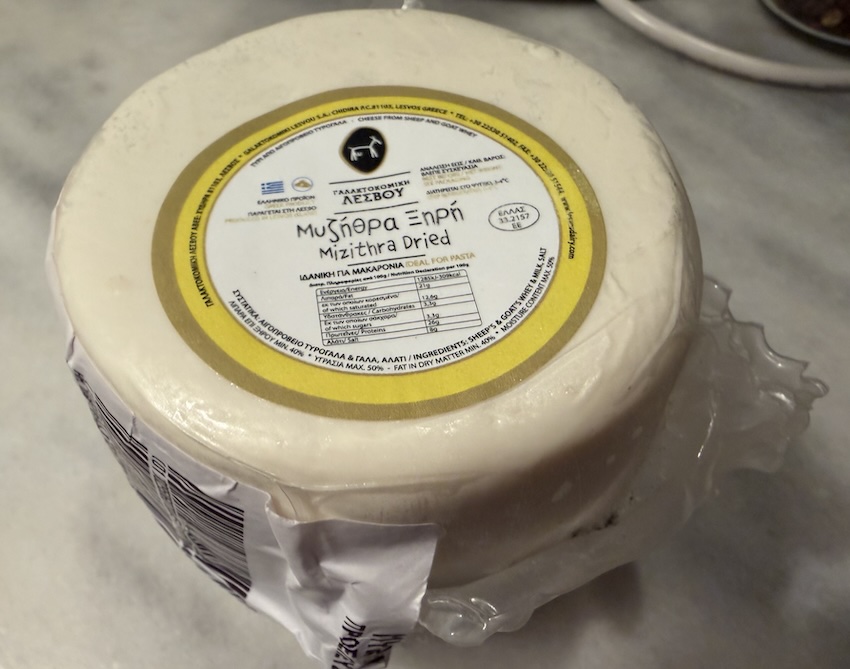
Myzithra is a dry ricotta cheese that is produced on the island. It is rich, dry, salty, and is mostly grated and used on pastas or in pies. I like this cheese but it does not melt so while the flavor is fantastic, sort of a sheepy version of grated parmesan, I am always bothered by the little pieces of unmelted cheese sitting in my pasta. I would suggest this cheese grated onto a salad. |
|
|
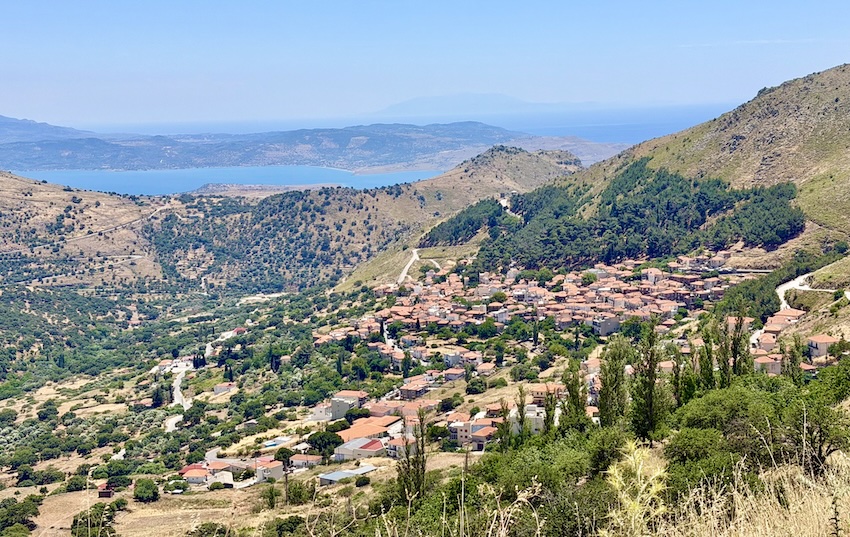
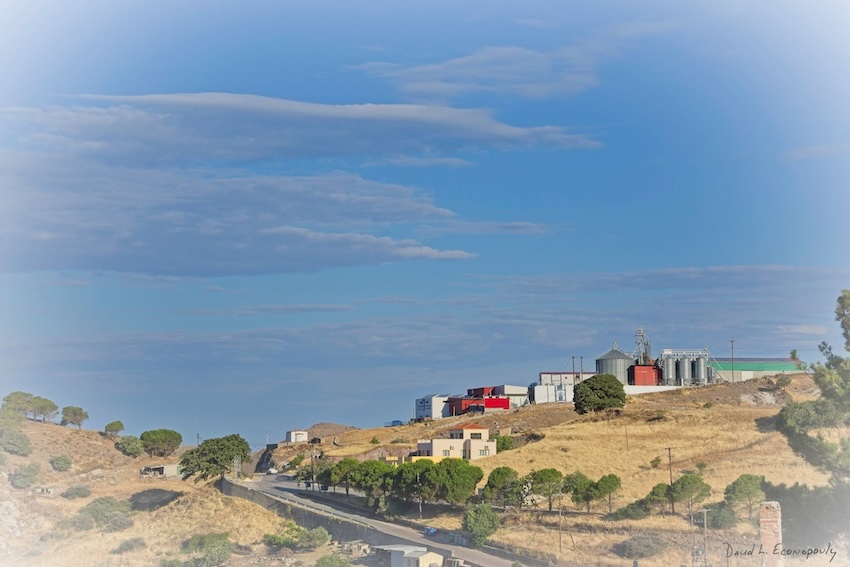
Cheese Companies and Cooperatives in LesvosOn to the cheese factories. Vatousa, the small village where I live during the summers in Lesvos, used to have one when I was younger and it stank to high heaven. We called it the stinky cheese factory. I heard that the factories used to smell so terribly because they would release the cheese byproduct into the streams by the factories and it would sit there and rot. Vatousa lost their cheese factory over a decade ago but now there is a big fancy one in the next village of Hidira and another on the old road to Skalohori and they don't seem to smell at all. In fact none of them stink any more so I guess there are new EU laws on cheese byproduct disposal that have been heeded. |
|
|
|
The Hidira cheese factory is called Galaktokomiki Lesvou or Lesvos Dairy and opened in 2006. This is my favorite cheese factory because not only is it in the village my great-grandmother was born in but also some of my family still lives there and has sheep so it’s fun to know I am eating cheese from sheep I am sort of related to. 500 farmers and shepherds give their product to Lesvos Dairy which they use to produce about a million kilos of cheese per year. Another major plus about Lesvos Dairy is their logo, which is a stick figure goat with udders. It is the cutest cheese logo on Lesvos and possibly on Earth. Plus the cheese that the factory produces is very good much of it organic including the Feta. |
|
|
|
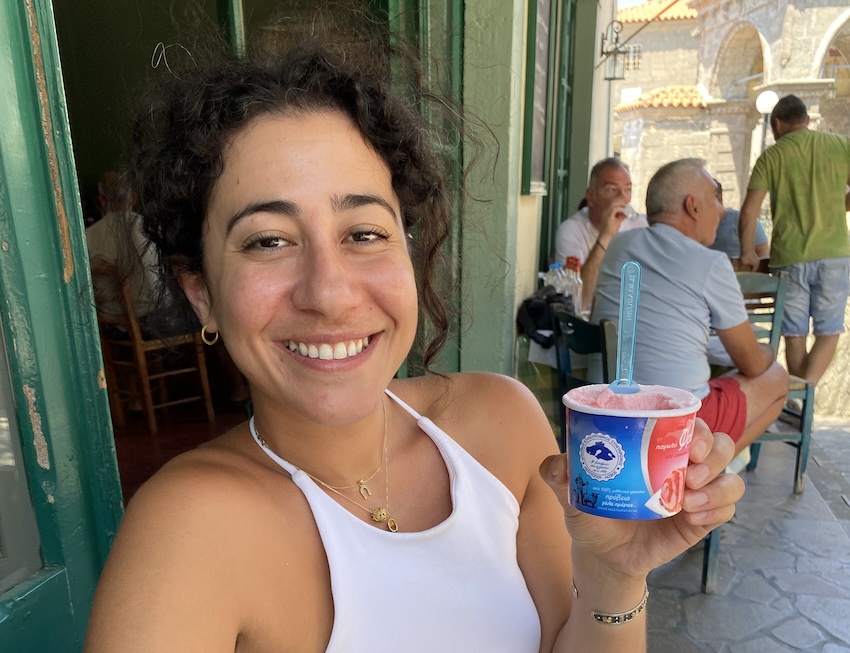
My second favorite cheese factory is the Agrotikos Sinetairismos Mesotopou, or the Agricultural Livestock Cooperative of Mesotopos. 173 farmers and shepherds are members of this cooperative and their combined livestock is 35,000 sheep and goats. Every year these animals produce four million kilos of milk which is used in this factory as well as a second factory owned by the cooperative in Antissa to make cheese. The Mesotopos factory also makes the most delicious ice cream on the island which is becoming more widespread in mini markets and restaurants. My favorite flavors so far are strawberry and biscuit. I have heard the orange flavor is really nice. Supposedly this factory also makes frozen yogurt although I haven’t found any of that yet though it is on their website and probably in the shops in the larger towns. Their feta may be the best on the island (besides my thia Aglaia who makes hers in her home in Hidira). Other products include sheep and goat yogurt, rizogalo (rice pudding), butter, heavy cream, and a number of organic products. They also have shops in Mytilini, Illioupoli, Athens and Kalamaria, Thessaloniki. |
|
|
|
There is another cooperative in Mandamatos called the Agricultural Cooperative of Mandamatos. The cooperative began in 1929 to produce olive oil but in 1959 it started making cheese. Mandamatos is on the other side of the island from where I spend my time and I almost never go there so I haven’t visited this factory but it is worth mentioning because they sell two different types of butter, one called voutyro nwpo or fresh butter which is basically an unsalted butter, and one called voutyro agno or pure butter which is made by boiling regular butter so I think it might be something like ghee. They also make Feta, Graviera, Ladotyri, and Myzithra. The factory and their retail cheese shop are located right opposite the Monastery of the Archangels (Pamagiston Taxiarchon). |
 |
|
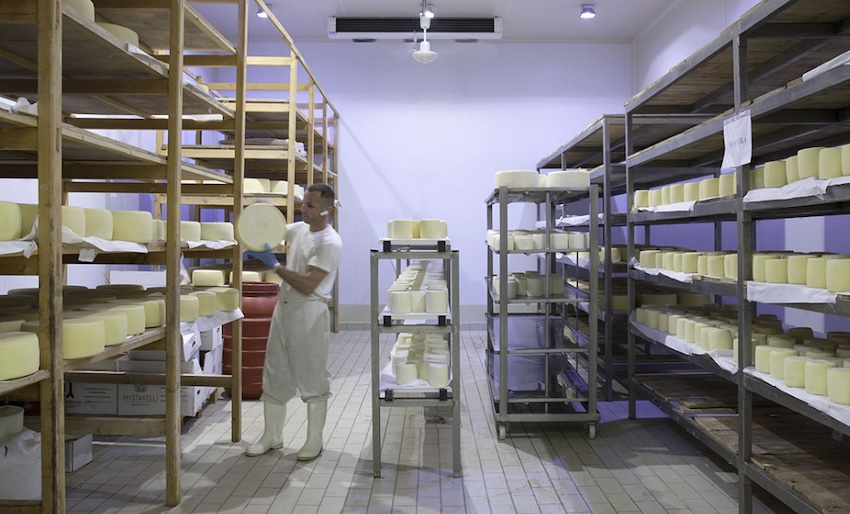
Also in Mantamatos Mystakelli Dairy Products is a privately-owned facility started in 1962 by Stratis Mystakellis in his traditional cheese factory, which was later expanded by his son Giannis. This modern cheese factory has an annual capacity of 250 tons of soft and hard cheeses including Ladotyri in Extra Virgin Olive Oil, Kaseri, Feta, Graviera, Kefalotyri, Myzithra, Anthotyros, Butter and Yogurt. All products are of the highest quality and made from sheep and goat milk |
|
|
|
The largest cheese company on Lesvos, in fact the largest in the Aegean and one of the top 10 cheese producers in Greece is Lesvigal. Founded by the Rodou family in 1968 in Hidira the company moved to a new modern location between the villages of Vatousa and Skalohori where they collect milk from 800 farmers, via ten milk collection points scattered across the island. The new facility boasts three production lines: one for feta cheese, one for hard cheeses and one for semi-hard cheeses. Their Traditional Cheese is made from the milk of organically reared sheep and goats, indigenous to Lesbos, either raised with great care on farms on the island and fed on high-quality animal feed, or allowed to graze freely in the island’s pastures. These include Feta, Ladotyri, Kaseri, Graviera and Kefalotiri. |
 |
|
In the village of Agra in southwestern Lesvos there is the Tastanis Cheese Factory which is internationally renowned for its feta, exported and distributed internationally as Essex Feta. Locally they are also known for their line of cheeses and their yogurt. Most of the cheese factories on the island make yogurt. Lesvos yogurt is fermented in clay pots which helps it develop a thick consistency and the layer of “skin” that sits on top of the yogurt in the container when you buy it. Because the islands yogurt is made from sheep and goat milk it is thicker, sharper and higher in fat than cows milk yogurt. |
|
|
|
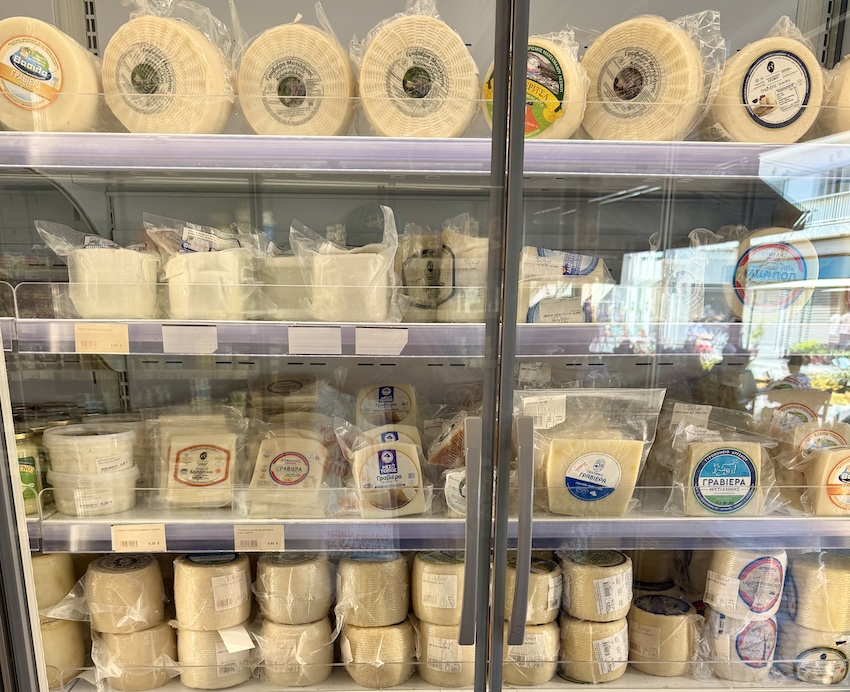
There are various places on the island where you can buy local cheese. Some small village grocery stores will sell them, and there is a great little supermarket in Kalloni called Selachas that has a large selection, in fact they may have every cheese sold commercially on the island. Another good place to find local cheese are the womens cooperatives. These are shops where you can purchase cheese, homemade pastas, trachanas, jams, pastries, cakes, and other handmade food items. The Mesotopos Women's Cooperative is at the top of Mesotopos village, on the main road. They have wonderful dried pastas there as well as all the fantastic Mesotopos cheeses. There are also women’s cooperatives in Skalohori, Petra, Agiassos and Molivos as well as other villages. And if you are in Athens and won’t be able to make it to Lesvos on this visit, the Peri Lesvou Shop at 27 Athinas Street, off of Monastiraki square, has Lesbian cheeses (and lots of ouzo). |
|
|
Foot and Mouth in LesvosThis whole wonderful world of Lesvos cheese was upended in March 2026 when a case of foot and mouth disease was discovered in a flock of sheep in the northern part of the island. The Greek government stepped in and instead of innoculating the sheep their policy was to destroy the entire herd. By July 2026, a total of 10,026 animals had been confirmed infected, while the number of animals destroyed was over 60,000 and counting. Though the disease cannot be passed on to humans, shepherds were not permitted to sell their milk and the cheese companies were not permitted to make or sell cheese. According to the Athens newspaper Kathimerini… “At the same time, sheep and goat pox has led to nearly half a million animals being culled nationwide since August 2024. The conservative government has pledged to compensate all affected farmers. With both diseases – neither of which affects humans – government officials have ruled out vaccinations due to the consequences that would have on the country’s status as an exporter, insisting instead of strict containment and public health measures. This has proved highly unpopular among farmers.” With 15% of the island’s livestock population having been killed and shepherds and cheese companies in a state of desperation, the future of Lesvos cheese is uncertain. |
|
|
|
For more about Lesvos see Matt Barrett's Lesvos: More Than Just Another Greek Island. To learn more about Greek Food see Matt Barrett's Guide to Greek Food |
|
|

Return to Lesvos Index
Join Matt Barrett's Greece Travel Guides Group on Facebook for comments, photos and other fun stuff. If you enjoy this website please share it with your friends on Facebook. If you are appreciative of all the free information you get on my websites you can send a donation through Paypal Or you can use Venmo at venmo.com/Matt-Barrett-Greece