|
 The island of Lesvos has a vast and varied landscape
which offers numerous species of birds exactly what
they want. Thus it is a haven not only for
birds but for birdwatchers too who arrive in
droves in the spring. This is also the best
time to see the beautiful display of
wildflowers. For people interested in birds
the best place to see them is
Skala
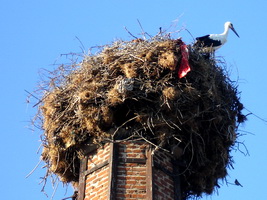
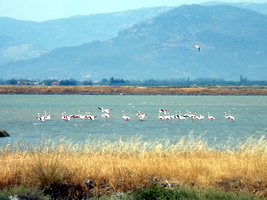
Kaloni with its miles and miles of salt marshes which attract all sorts of birds including flamingos, and storks who make their nests on the chimneys of abandoned factories. On the marshlands of Kaloni there are elevated sheltered watchtowers where you can stand hidden and view the birds feeding. There are marshlands lands, streams, springs and seasonal rivers all over the island including Vatera, Skala Eressos, Campo and Archaia Antissa and Sigri and just about anywhere you go you will see interesting birds, not to mention turtles, lizards and other creatures. The island of Lesvos has a vast and varied landscape
which offers numerous species of birds exactly what
they want. Thus it is a haven not only for
birds but for birdwatchers too who arrive in
droves in the spring. This is also the best
time to see the beautiful display of
wildflowers. For people interested in birds
the best place to see them is
Skala
Kaloni with its miles and miles of salt marshes which attract all sorts of birds including flamingos, and storks who make their nests on the chimneys of abandoned factories. On the marshlands of Kaloni there are elevated sheltered watchtowers where you can stand hidden and view the birds feeding. There are marshlands lands, streams, springs and seasonal rivers all over the island including Vatera, Skala Eressos, Campo and Archaia Antissa and Sigri and just about anywhere you go you will see interesting birds, not to mention turtles, lizards and other creatures.
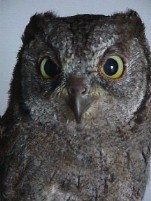 Lesvos is home to several species of owl. This Scops owl in the photo fell out of its nest
and landed at my feet while I was sitting in
the cafeneon in the Platia in Vatousa. We took
him home and fed him until he was old enough
to fly away. Despite being the symbol of
wisdom in ancient Greece, many villagers see
owls as bad luck and children ran away in
terror when they saw me holding this one. After
this everytime an owl fell from a tree he was
brought by the villagers to our house to
feed until they were old enough to take care of themselves.
We had a big rock in the kitchen and the owls would sit on it while I worked on my laptop, occassionally flying over to the table to try to distract me. Baby owls are playful like kittens. They also seem to have a lot of different moods and expressions. You can definitely tell when an owl is pissed off. In all I think I raised 11 owls though two of them died. Now the village is
full of Scopes Owls and you can hear them every night crying a distinctive kyo-kyo.
People say that the summer we saved all those baby owls changed the owl population forever. In some villages like Vatousa and Xidera you can see and hear large Barn Owls, light in color with big white faces, who make a very loud breathing sound, from the top of Platanos Trees in the platias.
Lesvos is home to several species of owl. This Scops owl in the photo fell out of its nest
and landed at my feet while I was sitting in
the cafeneon in the Platia in Vatousa. We took
him home and fed him until he was old enough
to fly away. Despite being the symbol of
wisdom in ancient Greece, many villagers see
owls as bad luck and children ran away in
terror when they saw me holding this one. After
this everytime an owl fell from a tree he was
brought by the villagers to our house to
feed until they were old enough to take care of themselves.
We had a big rock in the kitchen and the owls would sit on it while I worked on my laptop, occassionally flying over to the table to try to distract me. Baby owls are playful like kittens. They also seem to have a lot of different moods and expressions. You can definitely tell when an owl is pissed off. In all I think I raised 11 owls though two of them died. Now the village is
full of Scopes Owls and you can hear them every night crying a distinctive kyo-kyo.
People say that the summer we saved all those baby owls changed the owl population forever. In some villages like Vatousa and Xidera you can see and hear large Barn Owls, light in color with big white faces, who make a very loud breathing sound, from the top of Platanos Trees in the platias.
GEOGRAPHY,
FAUNA AND BIOTYPES:
 Lesvos was
originally joined to the coast of Asia
Minor,but was detached by powerful geological
disturbances. It is 70 kms longby 45 kms wide,
with an area of 1630 sq. kms. It has 2 large
bays, Kalloni'sand Gera's, both with narrow
entrances. These two bays are famous for
theirmarine life and their beauty. Though
there are no permanent large rivers with a
steady flow of water, there are abundant
springs, and water-courses in winter and spring
at least. Some of the river mouths and pools
are semi-tidal and never dry out, even in
autumn. Indeed, strong winds in the right
direction at this time of year can whip up the
sea and send it some way up the rivermouths.
Such areas include Kalloni East and West
Rivers, Skala Eressos River, and the
inter-tidal rivers and pools at the area known
as "Derbyshire".
Moreover,
the island's 2 sets of salt pans, certainly
those at Skala Polichnitos, usually remain
wet. Although the main Kalloni Salt Pans have
been known to dry up, there is always some
water in the surrounding channels. Lesvos was
originally joined to the coast of Asia
Minor,but was detached by powerful geological
disturbances. It is 70 kms longby 45 kms wide,
with an area of 1630 sq. kms. It has 2 large
bays, Kalloni'sand Gera's, both with narrow
entrances. These two bays are famous for
theirmarine life and their beauty. Though
there are no permanent large rivers with a
steady flow of water, there are abundant
springs, and water-courses in winter and spring
at least. Some of the river mouths and pools
are semi-tidal and never dry out, even in
autumn. Indeed, strong winds in the right
direction at this time of year can whip up the
sea and send it some way up the rivermouths.
Such areas include Kalloni East and West
Rivers, Skala Eressos River, and the
inter-tidal rivers and pools at the area known
as "Derbyshire".
Moreover,
the island's 2 sets of salt pans, certainly
those at Skala Polichnitos, usually remain
wet. Although the main Kalloni Salt Pans have
been known to dry up, there is always some
water in the surrounding channels.
The main marshes
and flatlands, then, occur around Kalloni,
Skala Eressos and Sigri; and the hilliest
areas are in the west around Eressos, to the
north around Mythimna (Molivos), and to the
east around Agiassos; and the nearby Mt.
Olympus, peaking at 3500 ft, is the
highestpoint on the island after Mount
Lepetimnos, actually one metre higher! These
uplands are usually cloaked mainly in pines
and holme oak, with oliveson the lower
reaches, and, around Agiassos, some stands of
deciduous woodland, including sweet chestnut.
Around the coast, especially, there are large
areas of low-lying scrub and grassland, often
with a profusion of wildflowers in the spring.
Further inland, the dried-up river beds ( for
example just up from Skala Eressos ) offer
similar "arid" scrub with its own special
birds - like Rufous Bushchat.
|
|
The basic
geography of Lesbos, together with its size
and location so close to the Turkish coast,
mark it out as an area of variedhabitats, with
some good wetlands, likely to prove extremely
attractive to spring and autumn migrants; wet
enough to keep a fair variety of wintering
wildfowl, waders etc.; yet also playing host
to a good mix of breedingbirds - some of them,
like Cinereous Bunting and Kruper's Nuthatch,
quite outstanding.
To make access
easier, and to minimize disturbance to the
birds, a car is recommended. Birds generally
feel far less threatened, and in consequence
are far more approachable than if viewed on
foot or by bicycle.
WHERE TO WATCH BIRDS IN LESBOS- A BIRDER'S SITE
GUIDE:
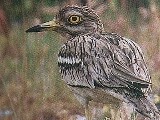 1
.
Kalloni two pool
1
.
Kalloni two pool
S
pring:
Garganey,
Black-wingedStilt, Little and Temminck's
Stint, Curlew and Wood Sandpiper, Little
Ringedand Kentish Plover, Gray and
Black-headed Wagtail, Citrine Wagtail,
GlossyIbis, Whiskered, White-winged,
Short-toed Lark and Olivaceous Warbler.Mute
Swans, and even the occasional Whooper, have
occurred here in a hardwinter.
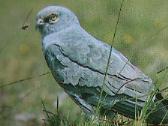 2
.
Kalloni
west River
2
.
Kalloni
west River
Spring
:
White and Black Stork, Avocet, Black-winged
Stilt, Great White and LittleEgret, Gray
Heron, Terns, Gulls, Wood and Curlew
Sandpiper, Greenshank,Curlew and Gray Plover,
nesting Stone Curlew, Kentish and little
Ringed Plover. In the scrubby areas, Corn and
Black-headed Bunting, Wagtails and Wheatears
are likely, with possible Great Crested and
Black-necked Grebein the bay.
Autumn:
Whiteand
Black Stork, Gray Heron, Gray Plover, Curlew,
Black-tailed Godwit,Yellow and White Wagtail,
Black-necked Grebe, Stone Curlew,
Kingfisher,and possible rarer waders like
Broad-billed Sandpiper.
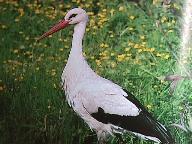 3.Potamia River
Spring:
Black
and White Stork, Little Grebe, Squacco, Night
and Gray Heron, Little Bittern, Little Crake,
Bee-eater, Stone Curlew, Cetti's Warbler,
hirundines.
4.Parakila marsh:
Spring:
Little
Grebe, Black-White Stilt,Little Ringed and
Kentish Plover, Little Stint, Wood Sandpiper,
Avocet,Little Egret, Gray, Purple. Night and
Squacco Heron, Little Bittern, Shoveler(early
spring only), Olivaceous Warbler, hirundines
and swifts, Wheatearand possible Masked
Shrike.
5. South of Parakila (alsoknown as Devil's
Bridge)
:
Spring
:
Short-toed Eagle, Long-legged Buzzard,
Eleonora's, Rock Nuthatch,
Black-earedWheatear, Red-rumped Swallow,
Cretzschmar's and Cinereous Bunting.
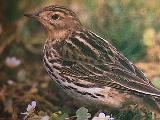 6.Potamia valley and Kalloni inland
lake
6.Potamia valley and Kalloni inland
lake
Spring:
LittleBittern,
Night, Purple and Squacco Heron, Marsh
Harrier, Little and SpottedCrake, Common
Sandpiper, Kingfisher, Alpine Swift,
Hirundines, Cetti'sand Olivaceous Warbler,
Nightingale, Whiskered and White-winged Black
Tern.
Autumn:
White,Yellow
and Gray Wagtail, Cetti's Warbler,
Whitethroat, Whinchat, SpottedFlycatcher, Cirl
Bunting, Wryneck, Greenshank, Ruff, Little
Stint, Kingfisher,Red-rumped Swallow, Alpine
Swift, Sand and Crag Martin.
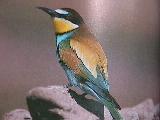 7.Kalloni east River
This
section is probably the best area to
viewsinging Olivaceous and Great Reed Warblers
soon after they arrive frommid to late April;
again before the vegetation becomes too
rampant. Short-toedLarks, buntings and the odd
Hoopoe are also likely along here; and thisis
usually the first site one encounters
returning Black-headed Buntingin late April.
Possible birds likely anywhere along the East
River are almost too numerous to
mention.
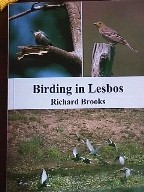 Descriptions on this page comes
from the excellent
Birding in
Lesvos
by Richard Brooks.
The photos (with the exception of the owl, stork and flamingos which are mine)
come from his book but I made copies using a
digital camera. The actual photos in the book
are far superior. Whether you have an interest
in birds or not I encourage you to buy this
book as a valuable natural guide to the
island. But if you were not interested in
birds you probably would not have gotten this
far down the page. Let him know you found him
on Matt's Lesvos Guide.
Descriptions on this page comes
from the excellent
Birding in
Lesvos
by Richard Brooks.
The photos (with the exception of the owl, stork and flamingos which are mine)
come from his book but I made copies using a
digital camera. The actual photos in the book
are far superior. Whether you have an interest
in birds or not I encourage you to buy this
book as a valuable natural guide to the
island. But if you were not interested in
birds you probably would not have gotten this
far down the page. Let him know you found him
on Matt's Lesvos Guide.
Contact Details
Phone: 01328 878632
Fax: 01328 878632
Address: 24 Croxton Hamlet, Fulmodeston,
Fakenham, Norfolk. NR21 0NP
E-mail:
email@richard-brooks.co.uk
Richard's book is not going to be reprinted so if you see a copy somewhere then buy it.
But in the meantime Steve Dudley's excellent book A BIRDWATCHING GUIDE TO LESVOS has been released to fill the void. For more information see Birdwatching in Lesvos
 If you are interested in birdwatching check out Steve Dudley's excellent website-blog that has lots of beautiful photos and detailed information on where to go and when to see the migrating birds that flock to the island. Steve also keeps a journal of the trips he leads every year.
See www.lesvosbirding.com If you are interested in birdwatching check out Steve Dudley's excellent website-blog that has lots of beautiful photos and detailed information on where to go and when to see the migrating birds that flock to the island. Steve also keeps a journal of the trips he leads every year.
See www.lesvosbirding.com
|
If you are
appreciative of the work contained on this website
and would like to make a donation then please send
it to the
Lesvos Wildlife Hospital
For
pictures of the Ponds, rivers, and tidal pools
of Lesvos
click here.
If you are
in Athens be sure to visit the
New
Zoolgical
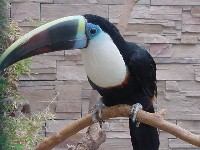
Park . It has the 3rd largest collection of
birds in the world. It is close to the
airport so if you have a layover think
about making the trip there rather
than hanging out in the terminal.
(especially if you are traveling with
your children) See
www.athensguide.com/zoo
|
|
|